

What We’ve Been Seeing on the Water
July has settled into its familiar summer rhythm here in the Lowcountry. Water temperatures are pushing into the 90s, afternoon thunderstorms have become part of the daily forecast, and the marsh is loaded with life. Finger mullet continue to grow – maybe the most we’ve seen in years – and shrimp are abundant throughout the creeks.
Most Active Species
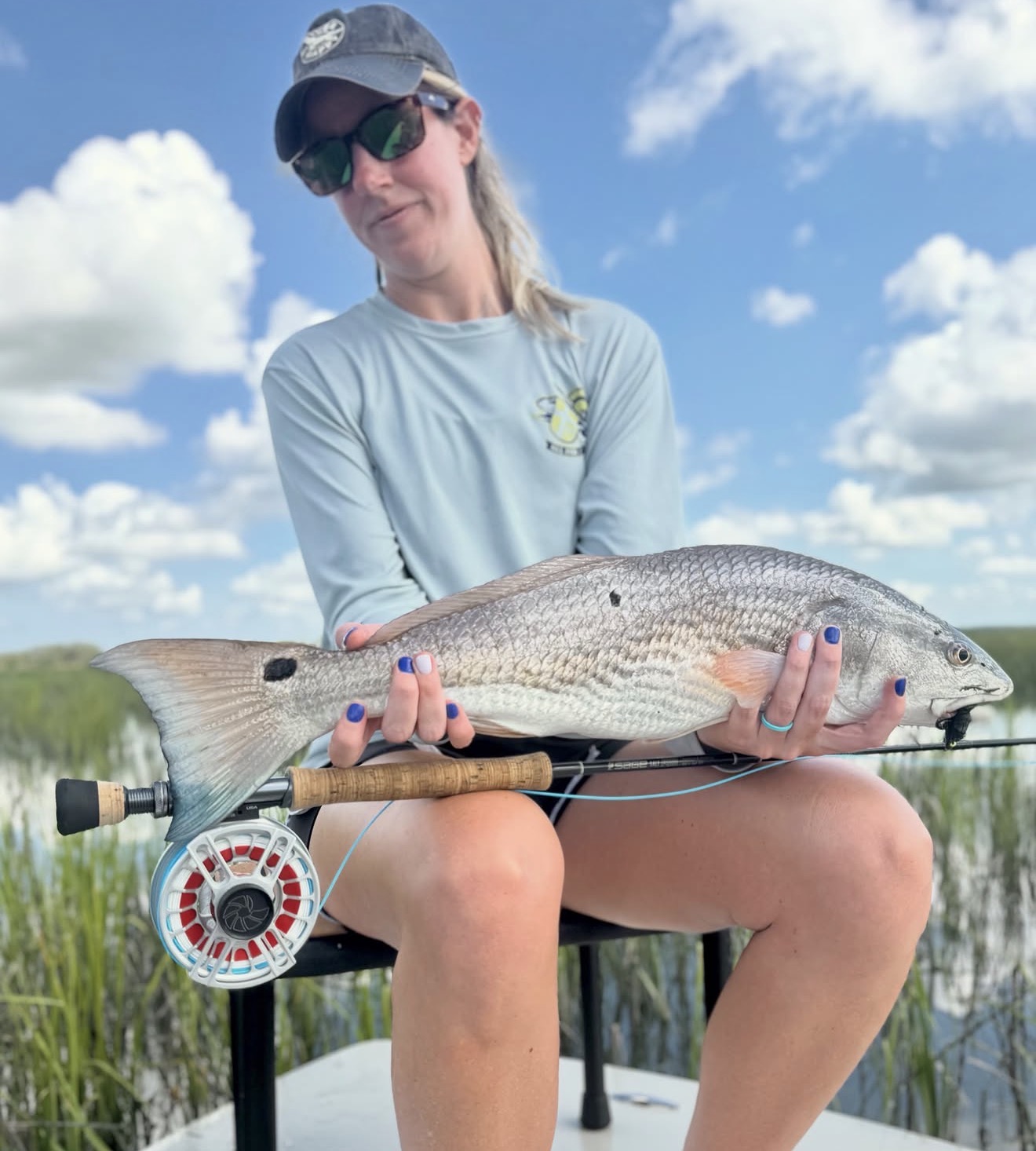
Redfish
Redfish, as is usually the case, are the most consistent target throughout July. Flood tides have produced excellent shots at tailing fish. To supplement those flood tide experiences, morning low tides have been excellent as well. The biggest tip this time of year is to fish SLOW. The water is stained and Redfish can be hard to see even in eight inches of water. Fishing slow allows them time to show themselves feeding on bait.
Tarpon
August should be prime time for tarpon in the Beaufort area. Rolling fish have become a common sight throughout the sounds and larger rivers, and we’ve had consistent opportunities at both laid-up fish and traveling groups.
These fish continue to reward patience and preparation. Having an angler ready on the bow, maintaining a sharp lookout (as well as hook point), and making quick, accurate presentations can make all the difference when a window opens. Every encounter is memorable, and the bite should remain strong through the coming weeks.
Cobia
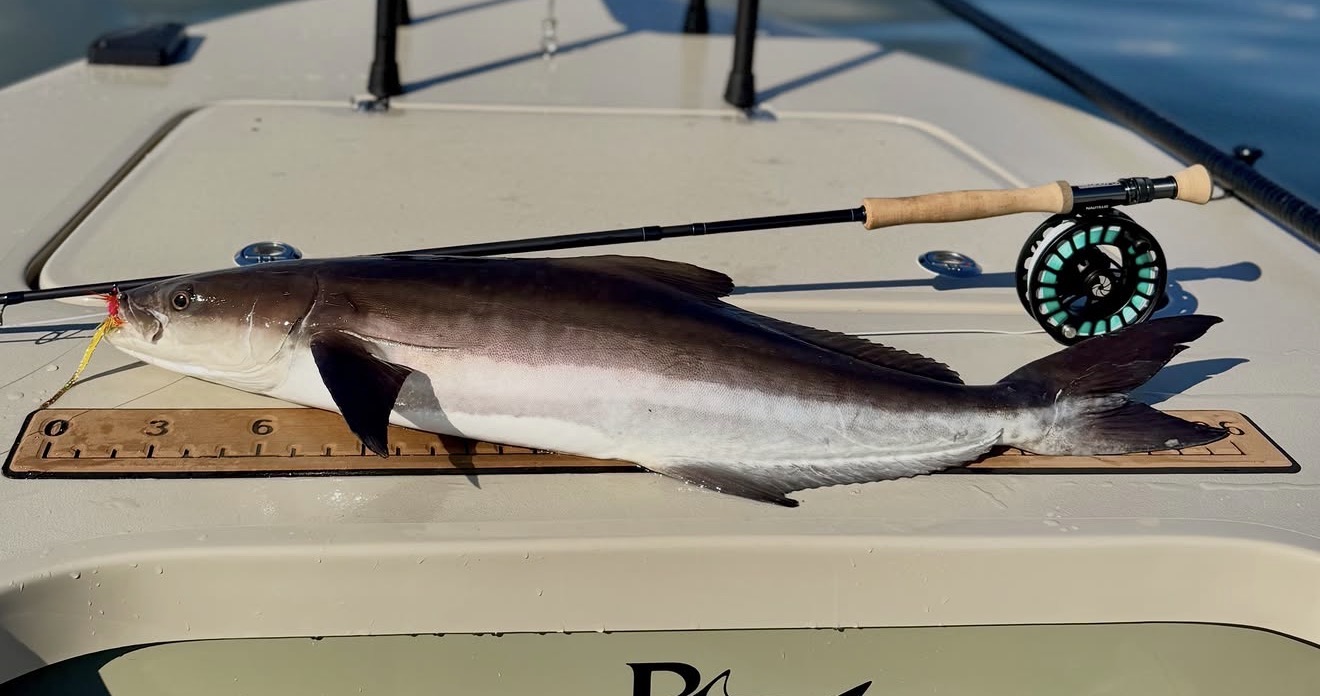
While the peak of the cobia season has tapered off, there are still fish moving through the rivers, sounds, and around nearshore structure. Many of our best opportunities have come while transitioning between redfish locations or checking floating debris. Admittedly, the fish seem to be smaller as of late. Keeping a heavier rod rigged and ready has continued to pay dividends, as cobia often appear without much warning.
Jacks
Jacks have been one of the highlights of July. Schools have been feeding aggressively on bait throughout the sounds and larger creek mouths, often announcing their presence with crashing surface feeds and diving birds.
If you find them, be ready for fast-paced action and long runs. These fish test both tackle and anglers and remain one of the hardest-fighting species available on a fly rod.
Shop Tips – What’s Working
Flies
Redfish
- Boyles Swamp Fox in rust and electric chicken have been fantastic on Floods and lows tide.
- Large profile flies like the Po Boy and Dirty Bird Crab remain excellent choices around oysters and shallow flats when water can be muddier.
Tarpon
- Black/purple Tarpon Toads and Old Salts continue to produce.
- Large EP baitfish patterns remain reliable for rolling fish.
- Strong hooks and fresh leaders are essential—Tarpon don’t offer many second chances.
Cobia
- Large Flashtail Whistlers continue to get the job done.
- White, chartreuse, red, and orange remain dependable colors.
- Keep retrieves steady and be prepared to speed up if a fish becomes interested.
Jacks
- Large white and chartreuse baitfish patterns.
- Foam poppers and crease flies when fish are feeding on the surface.
- Durable flies are a must—jacks rarely leave them looking new.
Gear
Rods: An 8 wt remains the everyday choice for redfish. An 11 or 12 wt is ideal for tarpon, while a 10 or 11 wt handles cobia and jacks with confidence.
Lines: Floating lines continue to cover most sight-fishing situations. An intermediate tip line is still a great option when targeting tarpon in deeper water or around stronger current.
Leaders: Use 9 ft leaders tapering to 20 lb fluorocarbon for redfish. Tarpon leaders should include 20–30 lb class tippet with 60–80 lb shock tippet. For cobia and jacks, 20–30 lb leaders with appropriate shock material continue to perform well.
Pro Tip
Keep your eye on the weather radar. August West to East thunderstorms have a tendency of passing and falling back on themselves (stalling, building, then beginning to move East to West). Do not become complacent once a pop-up shower has passed.
Leave A Comment